

The best fall wedding dress is the one that fits your month, local weather, venue and way of moving—not simply the gown with the longest sleeves. September can still feel like summer, October often calls for flexibility, and November may invite more coverage and richer texture. Start with the conditions of your actual day, then choose the lace, sleeve and silhouette that make you feel most like yourself.
This guide is for the bride choosing her own autumn wedding look. It will help you compare fall wedding dresses for September, October and November, narrow the right details for your setting, and discover romantic boho gowns that feel at home among changing leaves, candlelit rooms and open western landscapes.
The quick answer
- For September: look for airy lace, an easy skirt and sleeves that will not overwhelm a warm afternoon.
- For October: choose versatility—long lace sleeves, detachable sleeves or a silhouette that works from an outdoor ceremony to an indoor dinner.
- For November: consider more coverage, layered texture, a high neckline or a romantic sleeve, while remembering that lace itself is not a substitute for a warm outer layer.
- For every month: use your venue, terrain, ceremony time and local forecast to make the final decision.
How to choose a fall wedding dress
Autumn is a mood, but it is also a season of changing conditions. A mountain ceremony at sunset asks something different of a dress than an October celebration in a candlelit city venue. Before falling in love with one detail, build a simple picture of the day.
| Your wedding | Prioritise | Think twice about | A good direction |
|---|---|---|---|
| Warm September afternoon | Airy lace, movement, breathable underlayers | Heavy layering from the start | A-line, eyelet or lighter floral lace |
| Changeable October day | Adaptability and ceremony-to-dinner comfort | Choosing from a seasonal stereotype alone | Long lace or detachable sleeves |
| Cool November celebration | Coverage, texture and a planned outer layer | Assuming sheer sleeves provide warmth | High neck, full sleeve or layered lace |
| Field, ranch or woodland | Stride, hem control and texture that photographs in motion | Testing only on a smooth fitting-room floor | Boho lace, fringe or a manageable train |
| Chapel, manor or city venue | Neckline, back detail and how the dress looks seated | Adding details that compete with the room | Victorian lace, refined floral motifs or a clean A-line |
1. Begin with your month—and your climate
A calendar date is only the first clue. Early September in one place can be hotter than midsummer elsewhere; late November can bring rain, wind or an early dusk. Check typical conditions for your location and ceremony time, then look again at the short-range forecast as the date approaches. The goal is not to predict every cloud. It is to choose a dress and styling plan with enough flexibility to keep you present in the moment.
2. Let the venue guide the silhouette
For a meadow, forest or ranch, imagine the full route: getting out of the car, walking over uneven ground, standing during photographs and dancing later. A dramatic train can be beautiful, but it should be paired with a realistic bustle or a plan for carrying it. In an indoor venue, consider the scale of the room, the aisle, the seating and how the back of the gown appears during the ceremony.
3. Choose sleeves for style and flexibility
Long sleeves create an unmistakably romantic autumn line, especially in botanical, geometric or Victorian-inspired lace. Yet sheer lace sleeves offer visual coverage more than insulation. If temperatures may drop, pair the gown with a wrap, cape or jacket chosen for the setting. Detachable sleeves are especially useful when the afternoon and evening are likely to feel different.
4. Look at texture in the light
Fall light gives lace room to speak. Floral embroidery feels soft and organic; eyelet lace reads relaxed and pastoral; geometric or Art Deco-inspired motifs bring definition to a western setting. View your dress in daylight and warm indoor light if possible. Texture that looks subtle in a fitting room may become the most memorable detail in golden-hour photographs.
What makes a wedding dress feel autumnal?
A fall wedding dress does not need brown fabric, heavy sleeves or leaf-shaped embellishment. The seasonal feeling usually comes from a thoughtful combination of texture, light, setting and movement. That is good news: you can create an autumn look without wearing a gown that feels like a costume or choosing more coverage than the weather requires.
Texture creates depth
Openwork lace, botanical embroidery, eyelet cotton and bold geometric motifs all react differently to low autumn light. A fine floral pattern gives a soft garden feeling. Larger lace medallions make a stronger impression in an open landscape. Broderie anglaise feels pastoral and relaxed, while layered lace can bring an heirloom mood to a chapel or historic room. Look at the pattern from several steps away as well as close up; your guests and photographs will experience both views.
Sleeves shape the mood—but not necessarily the temperature
A fitted lace sleeve reads refined, a bell sleeve feels free-spirited, and a detachable flare sleeve can make the ceremony look more expressive before coming away for dinner and dancing. Choose the sleeve because you love its line and can move comfortably in it. Then solve warmth separately with an outer layer if the forecast requires one. This avoids expecting delicate lace to do a job it was never designed to do.
Movement matters more in a changing landscape
Wind, long grass, stone paths and fallen leaves all change how a gown behaves. Fringe, a fluid skirt and a veil can look extraordinary in motion, but only when you can control them. A fitted silhouette may need a split or enough stretch for a natural stride. A full skirt needs room around chairs and tables. A long train needs a carrying or bustle plan. The most atmospheric fall photograph often happens because the bride is moving confidently, not because the dress contains a particular seasonal detail.
Contrast makes ivory lace glow
Ivory and soft white gowns become especially luminous against amber grass, dark evergreens, weathered timber, terracotta walls and candlelit interiors. You do not need to put every autumn colour on the bride. Let the location, flowers, ribbon or a warm-toned hat provide the contrast, while the gown remains unmistakably bridal.
Your five-minute fall dress filter
- How warm or cool is this location usually at the ceremony time?
- How long will you actually be outdoors?
- What ground will you walk across?
- Do you want the sleeve, train or veil to create the main movement?
- Can the look adapt when the temperature or setting changes?
September wedding dresses: lightness with autumn character
A September bride often needs a dress that acknowledges autumn without dressing for cold weather that has not arrived. This is where openwork texture, a fluid skirt and a romantic neckline can do more than heavy fabric. Think soft movement for a garden, countryside venue or late-summer field, with a wrap kept nearby for the evening rather than built into the whole look.
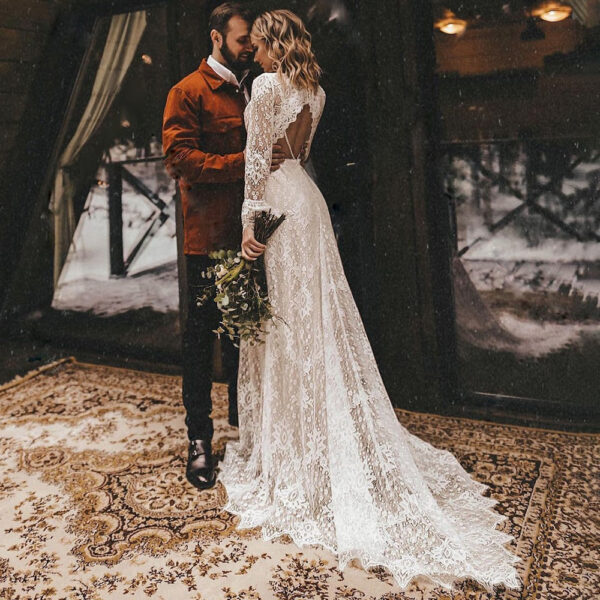
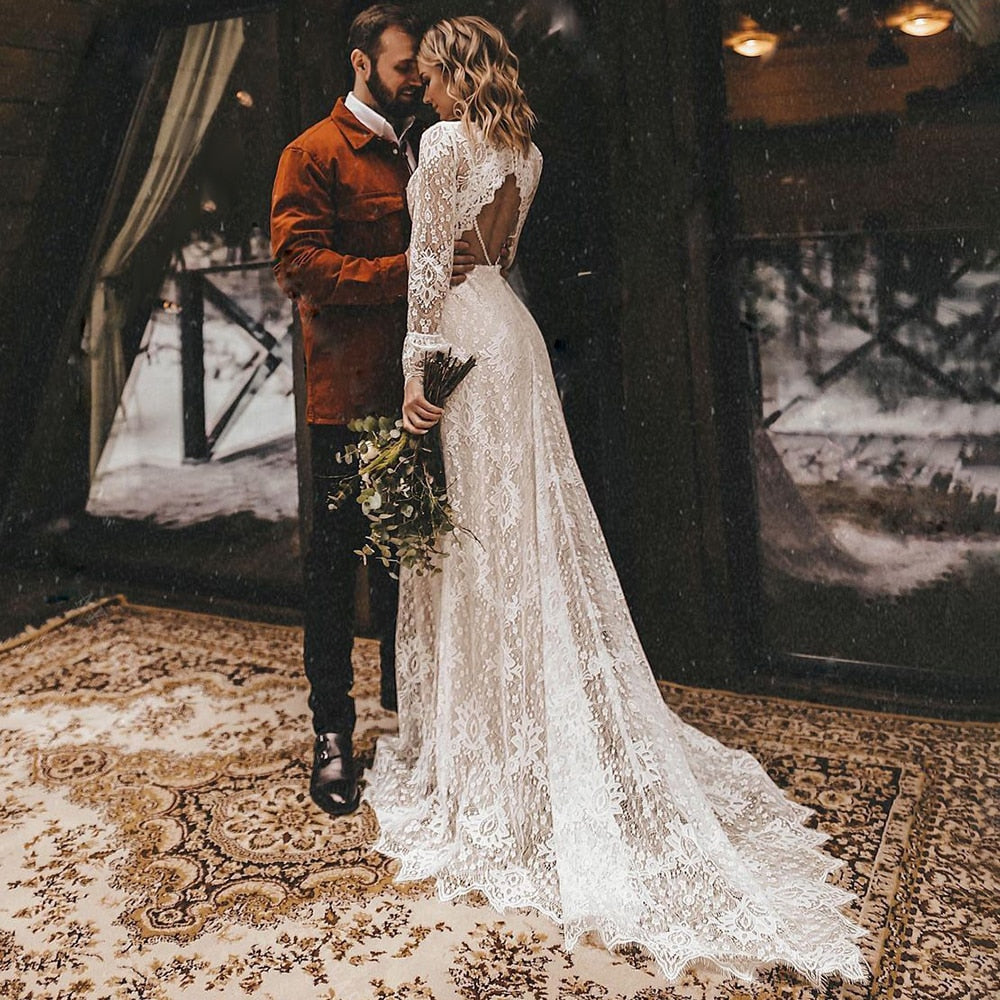
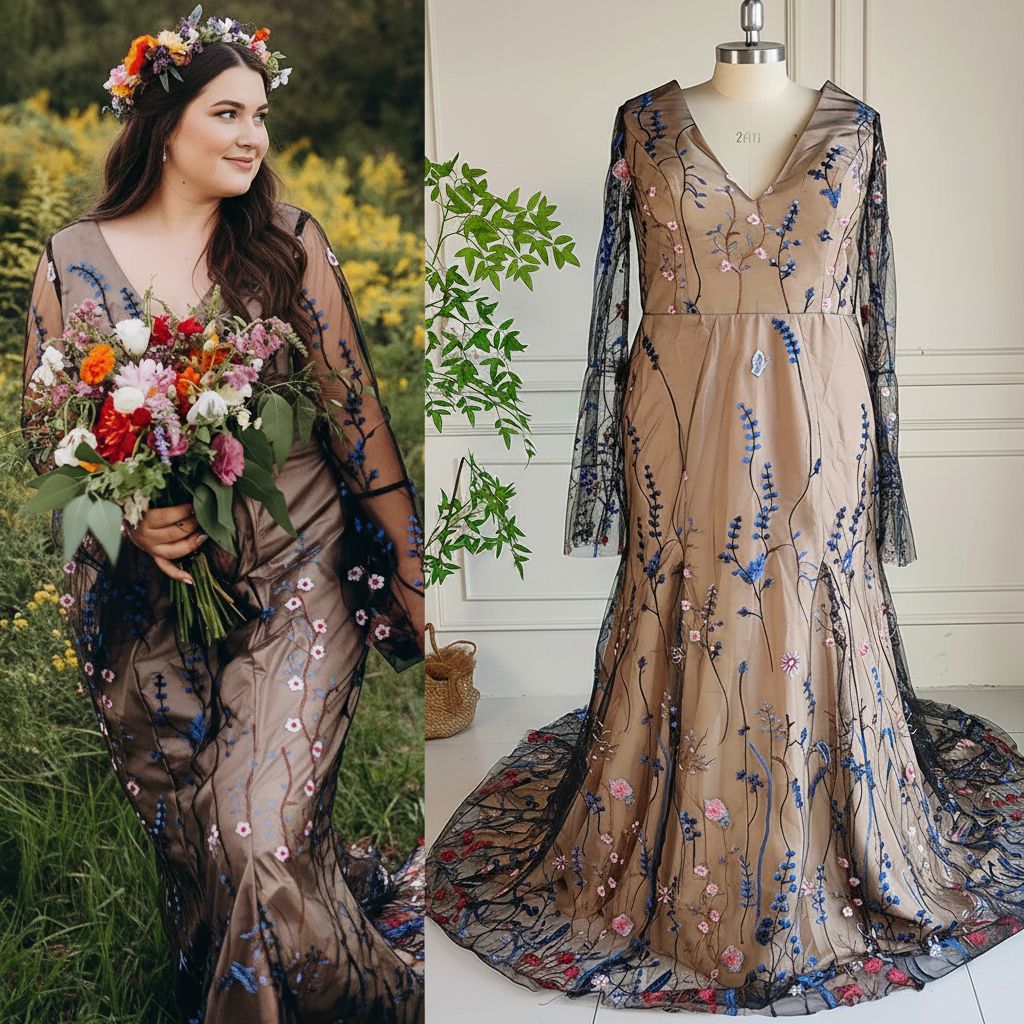
The Elegant Boho Floral Lace V-Neck Wedding Dress combines a defined V-neck, full sleeves and an A-line silhouette. It gives a September bride autumnal lace detail while retaining a lighter, flowing impression.
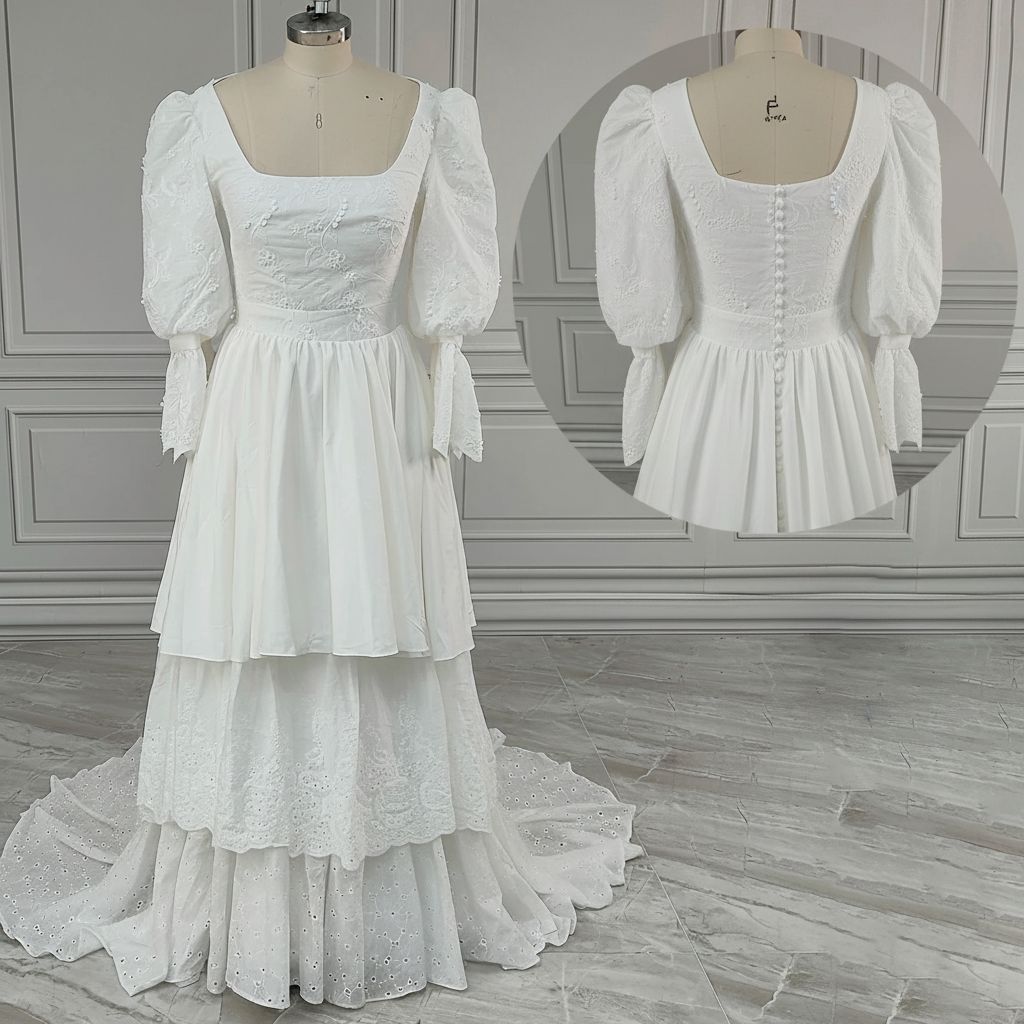
For a more pastoral direction, the Vintage Broderie Anglaise Wedding Dress uses eyelet texture and a tiered skirt to create movement without visual heaviness. The Meadow Muse Bohemian Bridal Gown is another natural starting point for a bride drawn to a softer countryside mood.
October wedding dresses: romance with room to adapt
October is the heart of the fall wedding season, but it is rarely one temperature from morning to night. The most useful dress features are those that let the look evolve. A long lace sleeve can create the autumn feeling you want; a detachable sleeve can change the balance between ceremony and reception; an expressive train can make the most of the lower afternoon light.
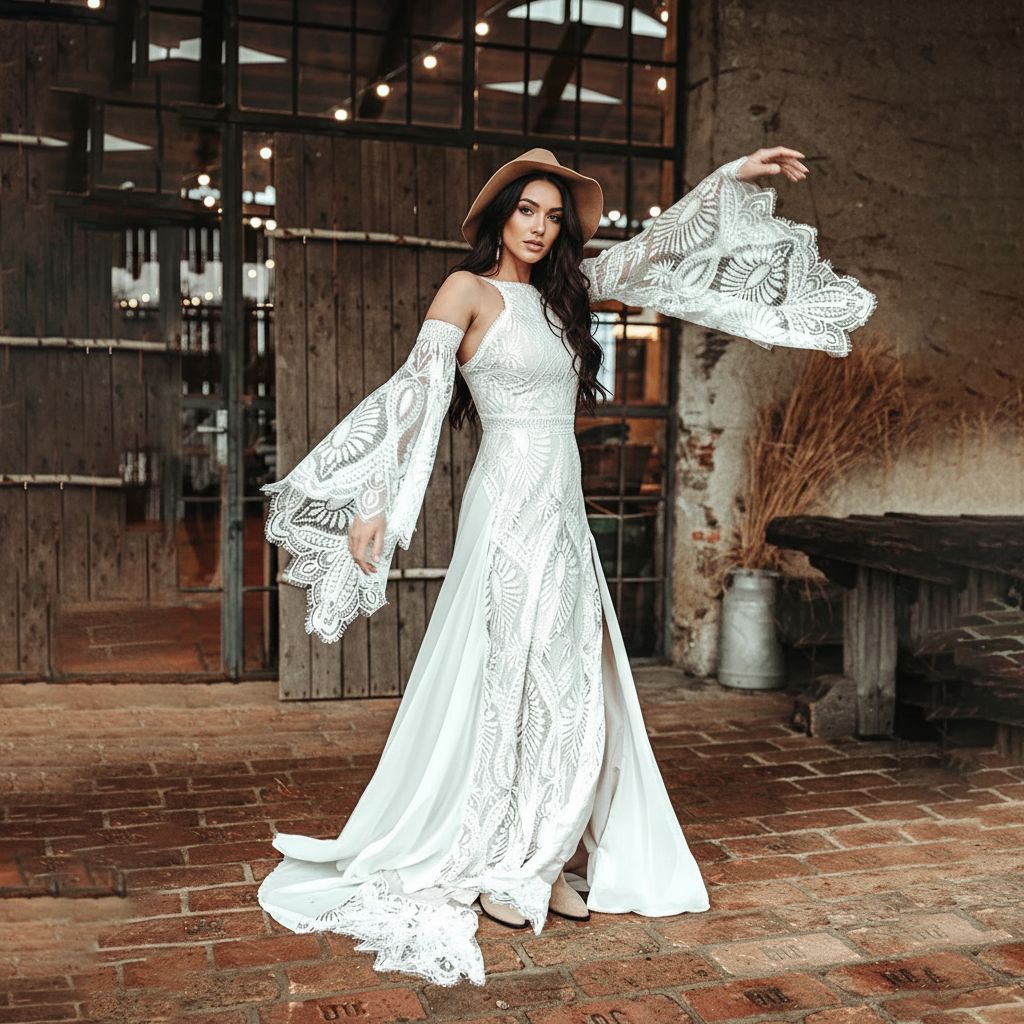
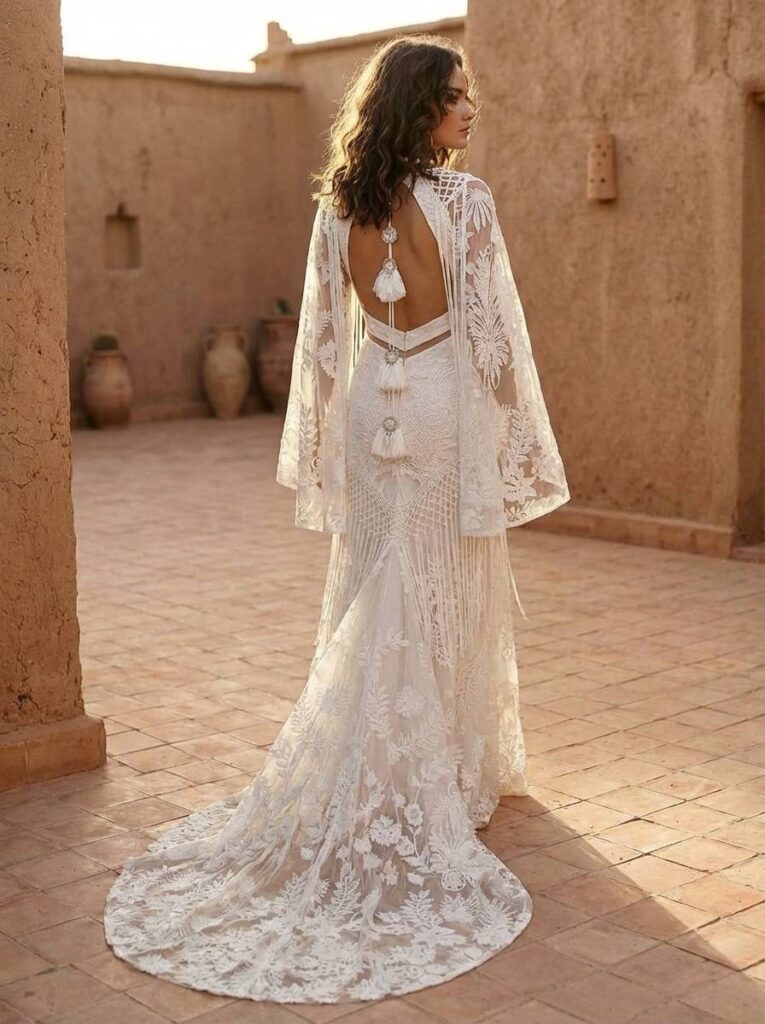
The Wildflower Bride’s Dream Boho Long Sleeve Wedding Dress is the statement choice in this edit. Its sweeping bell sleeves, all-over patterned lace, fitted mermaid line and cathedral-length train create drama in open fields, stone settings and spacious venues. The open back and front split keep the design from feeling closed in.
If you want the ceremony look to transform, consider the Western Boho Wedding Dress with Detachable Flare Sleeves. The removable sleeve detail gives you a practical way to shift the silhouette rather than asking one version of the dress to suit every part of the day.
The Ever After Elegance Boho Wedding Dress brings a polished bohemian option to the October shortlist. It is well placed for a bride who wants romance and softness without making fringe or an exaggerated sleeve the centre of the look.
November wedding dresses: texture, coverage and candlelit drama
November lends itself to high necklines, long sleeves and more intricate layering—but comfort still comes from planning the whole outfit. A lace sleeve can complete the aesthetic while a cape, wrap or jacket handles the colder air. Decide in advance whether the outer layer should appear in portraits, then try it with the gown so the neckline, sleeve volume and proportions work together.
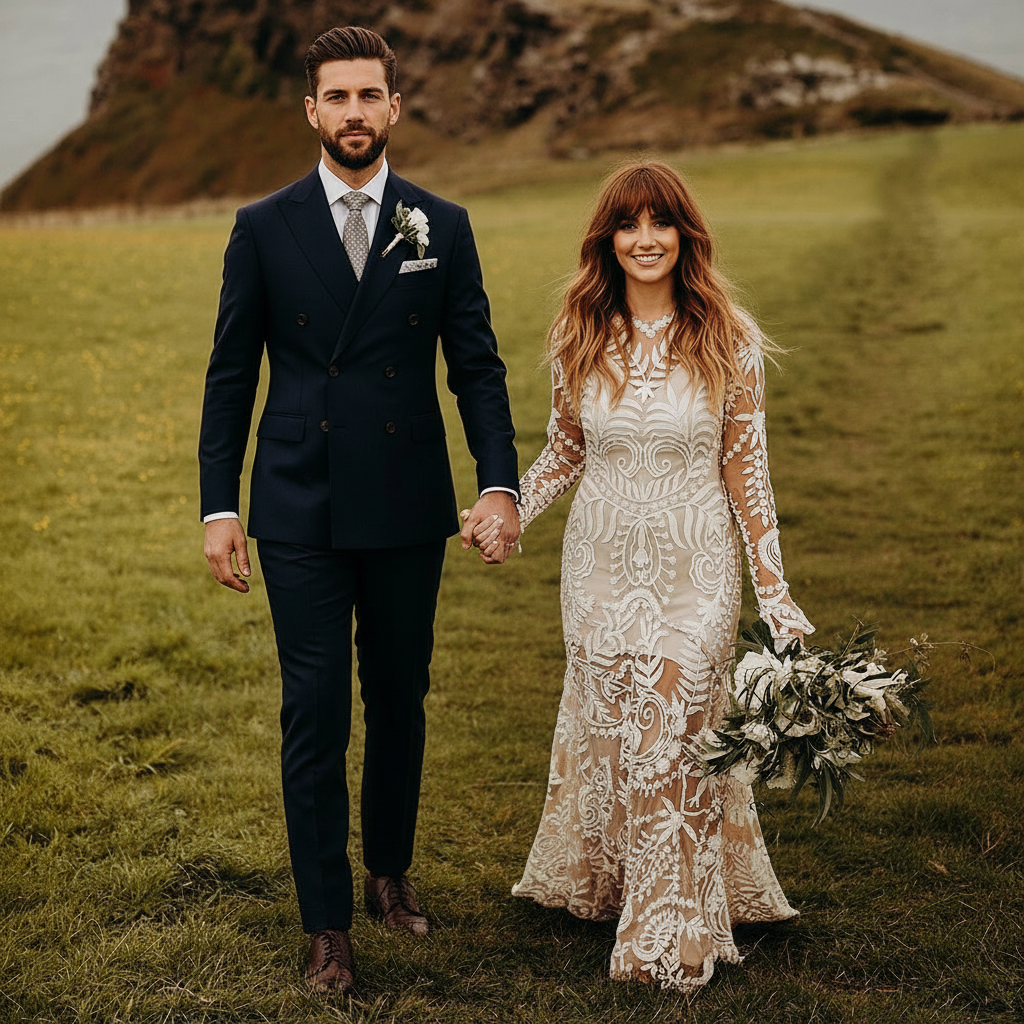
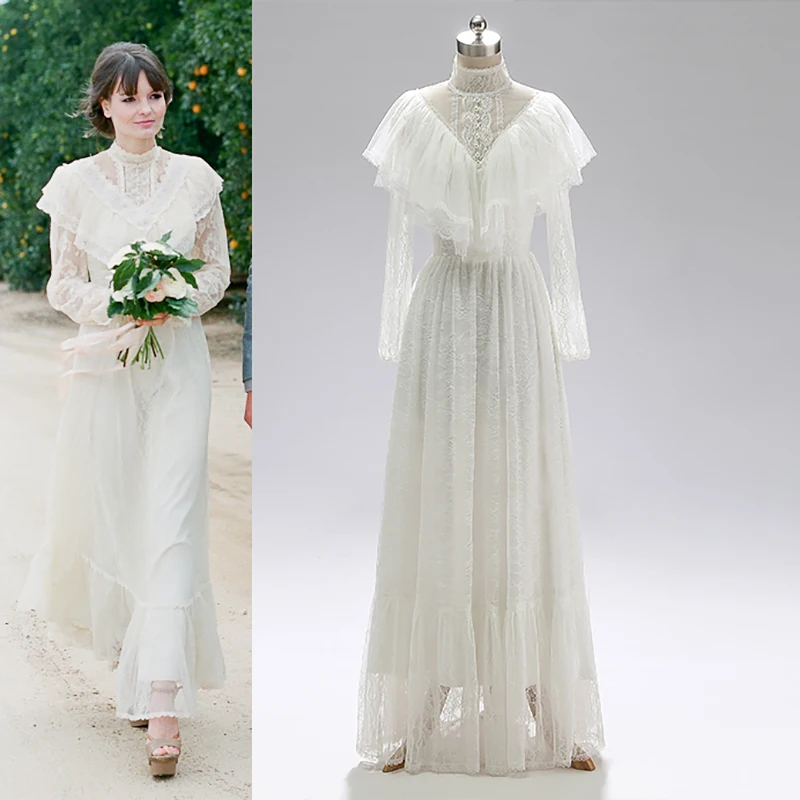
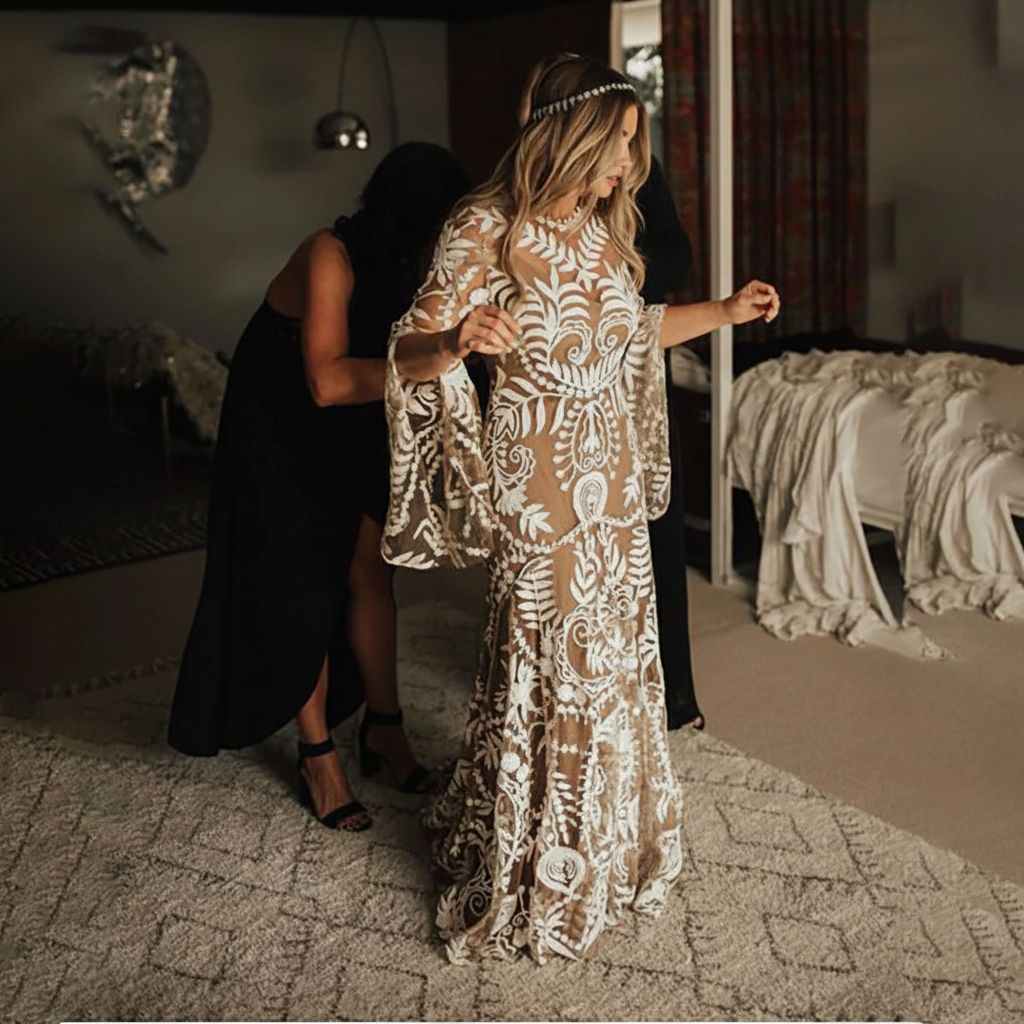
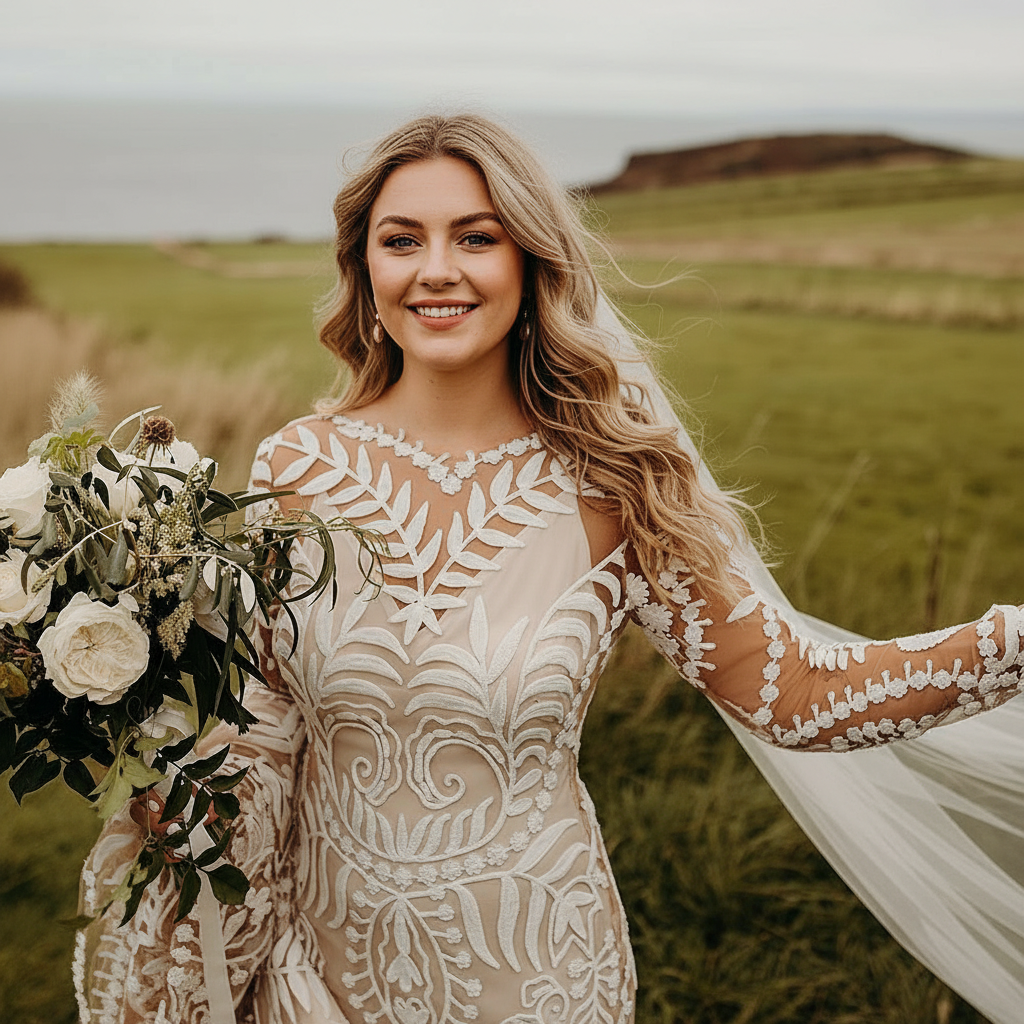
The Timeless Grace Victorian Long Sleeve Lace Wedding Dress has an heirloom sensibility: a high lace neckline, sheer sleeves, layered skirt, embroidered bodice detail and a keyhole back. It feels particularly at home in a chapel, historic interior or intimate evening setting.
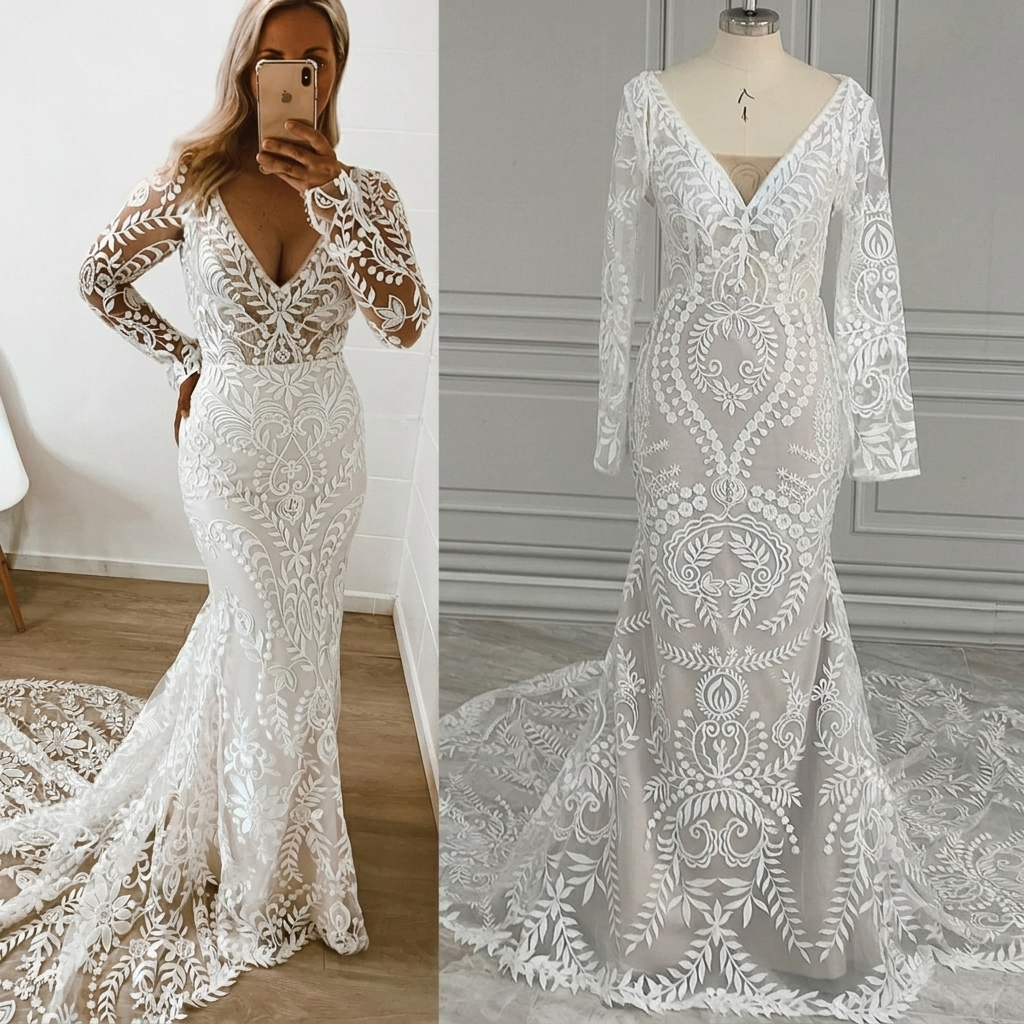
The Folklore Gown offers a different long-sleeve lace direction—romantic and storybook-led rather than formal. For brides seeking a gown designed with fuller curves in mind, the Botanical Plus Size Boho Wedding Dress with Long Sleeves adds botanical texture and full-length sleeves to the late-fall edit.
Fall wedding dresses for ranch, desert and open-range settings
A western fall wedding gives movement a starring role. Fringe catches the breeze, strong lace motifs stand out against open land, and bell sleeves echo the sweep of a wide landscape. The practical test is simple: can you take a full stride, lift your arms comfortably, sit without fighting the skirt and move across the actual ground beneath you?
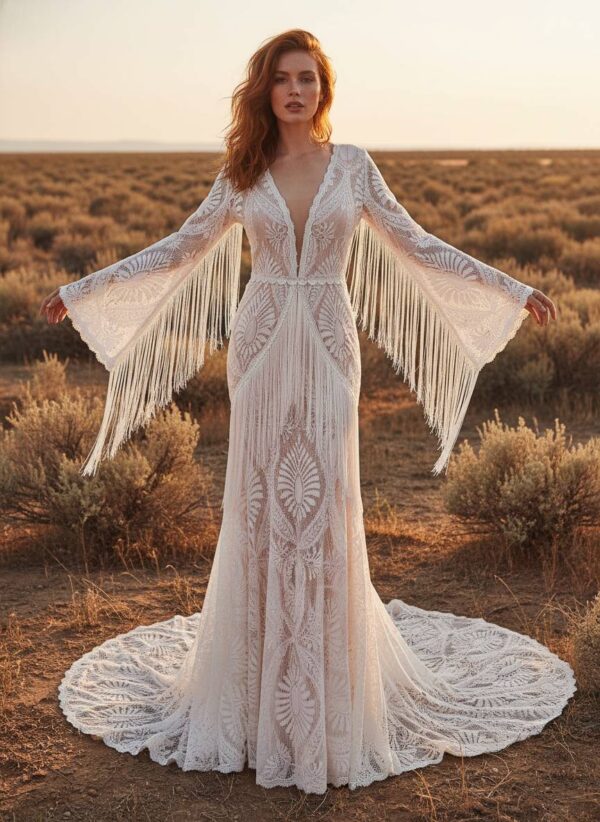
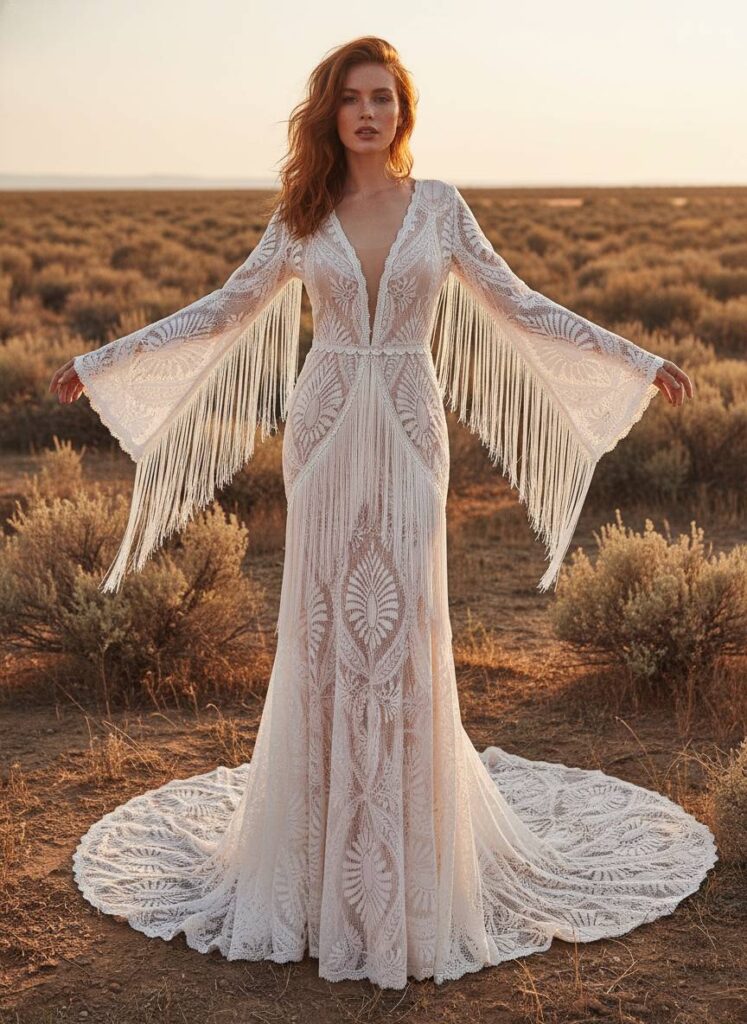
The Desert Romance Fringe Lace Wedding Dress pairs geometric, fan-like lace with a fitted mermaid silhouette, bell sleeves, cascading fringe and a cathedral train. It is intentionally dramatic, making it a strong choice for a ranch ceremony or wide-open landscape where the gown has room to move.
For western character expressed through lace rather than fringe, the Open Range Bride Western Lace Wedding Dress brings the setting into the story while keeping the emphasis on bridal texture. If you love this direction, compare both gowns while imagining your walk down the aisle, your portrait location and the reception floor—not only the first photograph.
Shop the fall wedding dress edit
This is a visual edit, not a ranking. Each gown answers a different kind of fall wedding: warm September gardens, changeable October fields, candlelit November rooms and wide western landscapes. Open the dresses that match your day and compare their full galleries before narrowing your favourites.
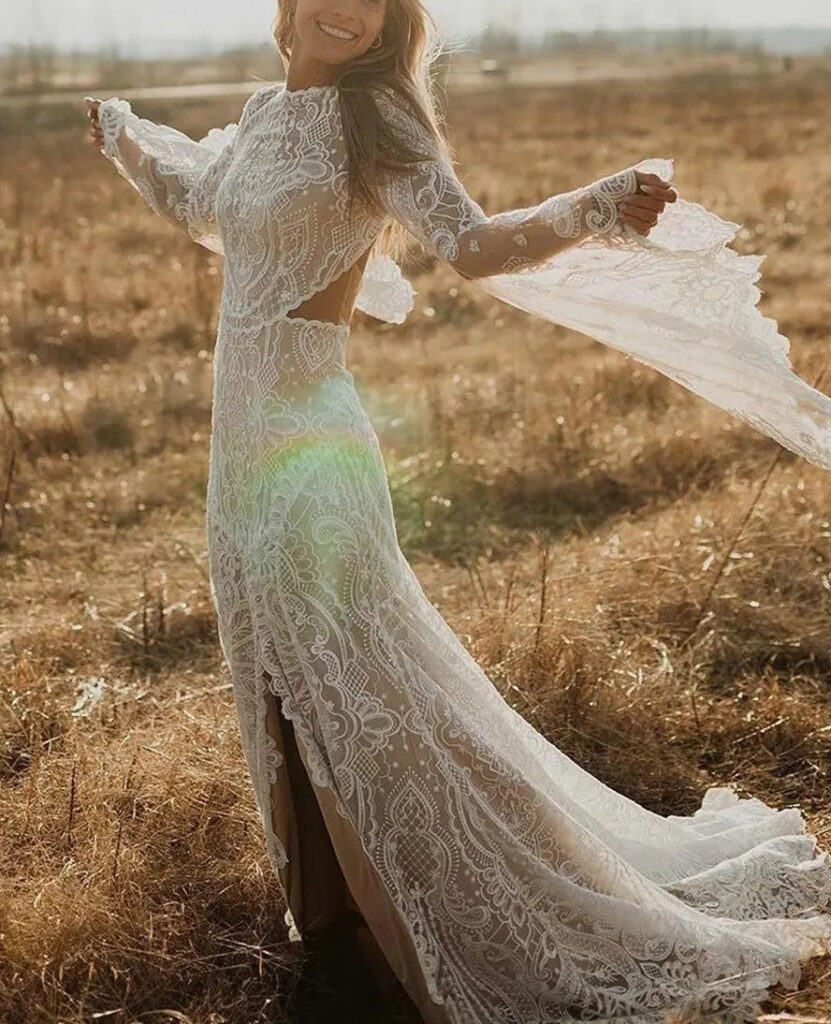
Want to see every bridal style?
Continue beyond the edit and compare more silhouettes, lace patterns and sleeve details in the complete collection.
Choose your fall wedding dress by venue and terrain
The setting does more than provide a backdrop. It determines how far you walk, how much space the dress has, where the train rests and what the fabric touches. Use the venue as a practical fitting room in your imagination.
Woodland and garden weddings
Prioritise a confident stride and a skirt you can manage over soil, leaves or grass. Botanical lace and eyelet texture echo the setting without needing literal leaf motifs. If the path is narrow, test whether a full skirt brushes both sides. For damp ground, decide who will help carry the train before the ceremony and how it will be bustled for the reception.
Barn and ranch weddings
Bold lace, detachable bell sleeves and fringe suit the scale and texture of timber, brick and open land. Think about more than the portrait location: check the aisle surface, doorway widths, seating and dance floor. A sleeve that looks extraordinary with your arms relaxed must still let you hug, lift a glass and dance. Western styling works best when the gown remains functional rather than becoming a collection of themed accessories.
Mountain and open-field ceremonies
Wind can turn a veil, sleeve or train into the most beautiful element of the look—or into something you manage all day. Choose one main movement feature and rehearse it. A fitted lace gown with a dramatic sleeve may need a quieter veil. A long veil can be the hero when the dress has a cleaner outline. Ask where you can stand safely for photographs and whether the walk includes slopes, gravel or steps.
Chapel, manor and candlelit interiors
High necklines, intricate backs and layered lace gain impact in slower, more formal spaces. Look at the gown seated as well as standing, because guests may see the neckline and sleeve at close range during dinner. Check how the dress responds to warm artificial light; ivory linings, sheer panels and lace contrast can appear different after sunset.
City and modern venues
A boho gown can feel completely at home in a modern room when the silhouette is intentional. A clean A-line with floral lace provides softness against concrete or glass. A fitted gown with an open back creates a strong architectural line. Keep additional accessories edited so the lace and shape remain the focus.
Practical fitting and styling advice for an autumn bride
Rehearse the real movements
During a fitting, go beyond standing in front of the mirror. Walk at your natural pace, take a longer stride, raise both arms, sit, turn and practise holding or bustling the train. If your ceremony is outdoors, test your wedding shoes on a comparable surface. A dress can look effortless only when you know how it behaves.
Build a weather plan around the dress
Decide what you will add if the temperature drops and where that piece will be kept. A wrap may be enough for a brief transition; a structured jacket or cape may suit a long outdoor portrait session. Try the layers together before the wedding. Sleeve volume, neckline height and fabric texture can change the way an outer layer sits.
Choose a veil that supports the silhouette
A veil can soften a fitted mermaid gown, extend the line of an A-line skirt or add ceremony presence to a simpler boho look. If the dress already has dramatic sleeves, fringe or a patterned train, compare a quieter veil against one with lace edging and let one detail lead. Browse the wedding veils collection with your gown’s neckline, back and train length in mind.
Finish the bridal look
Find the veil that lets your gown lead
Compare soft, romantic veils with your neckline, back detail and train before choosing the final layer.
Keep the colour story connected to the setting
Autumn styling does not require an all-rust palette. Ivory lace can look luminous against green woodland, pale stone, amber grass or a dark interior. Use flowers, ribbon, jewellery and the groom’s or wedding party’s clothing to echo the setting in smaller notes. The dress should remain the anchor, not another item competing for seasonal attention.
Fall wedding dress shopping checklist
Once you have a shortlist, compare the gowns using the same questions. This keeps a dramatic sleeve or beautiful photograph from distracting you from the dress that will actually serve your day.
Check the ceremony-to-reception journey
Write down every transition: getting dressed, travelling to the venue, walking to the ceremony, portraits, dinner and dancing. A gown can be perfect for the aisle and frustrating in the car; easy during dinner and difficult across a field. Note where you may need help with a train, where sleeves might catch and when an outer layer will be added or removed.
Try the dress at the right time of day
If possible, schedule a fitting when your energy level and meal timing are similar to the wedding day. Sit for several minutes, breathe deeply and move naturally. Comfort is not a small practical concern—it changes posture, expression and how freely you connect with people. The right fall wedding dress should still feel like yours after the first beautiful minute in front of the mirror.
Photograph the front, side, back and seated view
Ask for simple photographs rather than only posed portraits. Look at the sleeve from the side, the back while walking and the skirt while seated. If a veil or jacket is part of the plan, repeat the photographs with every layer. This often reveals whether two strong details are competing or whether the proportions feel balanced.
Practise the train plan
Know how the train will be carried, secured or bustled and who will help. Practise the fastening rather than relying on a verbal explanation. If the gown has fringe, lace points or a textured hem, check that the bustle does not trap the detail awkwardly. For an outdoor venue, bring a clean sheet to a fitting so you can rehearse without marking the dress.
Plan warmth without hiding the gown
Choose an outer layer that works with the neckline and sleeve volume. A close-fitting jacket may compress a bell sleeve; a cape may cover a back detail you planned to feature; a large wrap may change how you carry your bouquet. There is no wrong choice, but it should be intentional. Decide whether the outer layer belongs in the visual story or is simply waiting nearby for practical moments.
Leave room for the forecast to change
The final forecast may affect shoes, portrait timing and outerwear more than the gown itself. Prepare a dry-ground and wet-ground plan, identify a sheltered portrait location and keep the person responsible for the train informed. Flexibility protects the experience without asking you to rethink the entire bridal look at the last minute.
Fall wedding dress FAQ
What is the best wedding dress style for fall?
There is no single best silhouette. A-line gowns offer easy movement, fitted mermaid dresses create drama in spacious settings, and long-sleeve lace brings a romantic autumn look. Match the style to your month, venue, terrain and comfort.
Should a fall wedding dress have long sleeves?
Only if you love the look and it suits the conditions. Long lace sleeves add coverage and texture, but sheer lace may not provide much warmth. For a changeable day, detachable sleeves or a separate outer layer can offer more flexibility.
What should I wear for a September wedding?
For many locations, September still calls for lighter construction and good airflow. Floral lace, eyelet texture, an A-line skirt or a sleeve that does not feel heavy can bridge late summer and early fall beautifully. Always use your local climate as the deciding factor.
How do I choose a November wedding dress?
Start with the amount of time you will spend outdoors. A high neckline, long sleeves or layered lace can suit the late-fall mood, but plan a wrap, cape or jacket when the forecast calls for colder air. Test every layer with the gown before the day.
Can I wear a boho wedding dress to a formal autumn venue?
Yes. Look for refined floral lace, a clean A-line, a high Victorian-inspired neckline or a controlled train. Boho style can feel polished and venue-appropriate when the texture and silhouette are intentional.
What wedding dress works well for a ranch ceremony?
Choose a gown that lets you walk confidently on the ground, then consider western details such as bold lace, bell sleeves or fringe. Practise managing the hem and train, and wear shoes you have tested on a similar surface.
Which fabrics work best for an outdoor fall wedding?
There is no universal fall fabric. Lace, tulle, eyelet and smoother linings can all work when they suit the temperature and terrain. Look at how easily the fabric catches on the ground, how it moves in wind and how the lining feels after extended wear. Plan warmth with separate layers rather than choosing fabric weight from the season name alone.
How can I make a wedding dress look more autumnal?
Use texture and contrast. Botanical lace, long or detachable sleeves, a warm-toned bouquet, a veil with a defined edge, an earthy landscape or a candlelit venue can all create an autumn feeling. You do not need to combine every element; one or two deliberate seasonal notes are often more elegant.
Should I choose my veil at the same time as my dress?
Choose the gown first, then compare veils while wearing or clearly referencing it. The veil should work with the neckline, back, sleeve volume and train. A quiet veil can balance a strongly patterned dress, while a lace-edged veil can add ceremony detail to a cleaner silhouette.
Do you ship wedding dresses internationally?
We ship worldwide.
Find the gown that belongs in your autumn story
Begin with the month, weather and setting. Then follow the detail that feels unmistakably yours—soft floral lace, a sweeping bell sleeve, vintage eyelet, western fringe or an heirloom high neckline.